Call us: +971-4-29 888 66 info@crescentschooldubai.com



Crescent English High School follows Central Board of Secondary Education (CBSE) New Delhi, curriculum from Grade 1 to 12. A range of languages and subjects are taught which give varied learning experiences. It meets the needs and career aspirations of the students. The curriculum is largely well planned and includes a broad spectrum of elements and activities. It ensures the holistic development of students and nurtures a positive environment leading to individual achievement.
Our curriculum aims to prepare students not just to earn the highest grade but to create a better future through values, leadership and global awareness. It provides hands-on experiences which enhance life skills, critical and creative thinking skills, ICT and collaborative activities. Life skills develop the 21st century learners, making links and apply theory to real life situations thereby enriching the curriculum accepting that learning happens across life space. Robust systems and procedures are in place for monitoring and evaluating curriculum effectiveness.
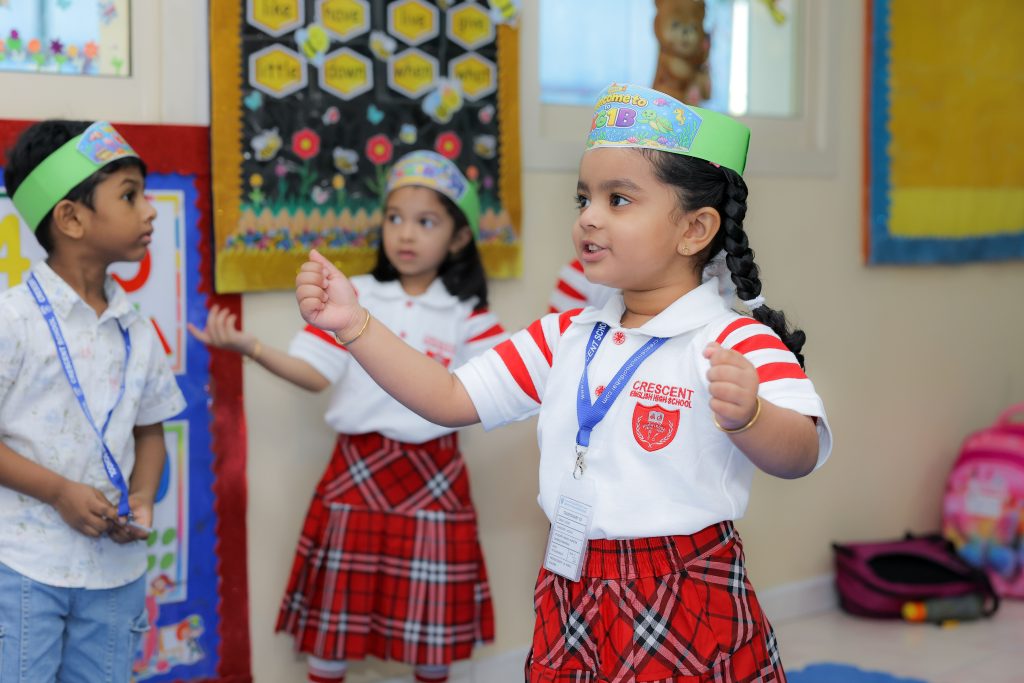
At Crescent, we define the early years as ages 4–5, encompassing KG1 and KG2. Our aim is to provide rich, enjoyable learning experiences that help every child grow in independence, self-confidence and responsibility. We nurture children’s interests, recognise their individual starting points and encourage them to become active learners and inquirers.
Our Kindergarten approach draws on the seven areas of the Early Years Foundation Stage (EYFS) and the National Curriculum Framework for the Foundational Stage adopted by CBSE. EYFS informs our early years practice; the CBSE framework guides progression in the Indian curriculum. The wider CBSE Foundational Stage covers ages 3–8, including Grades 1 and 2.
Areas of learning:
The three prime areas underpin learning across the four specific areas. Experiences connect these areas so that children can use their growing skills in meaningful situations.
|
Area |
Learning focus |
|
Prime areas |
|
|
Communication and language |
Listening, conversation, vocabulary and expressing ideas. |
|
Physical development |
Movement, coordination, fine motor skills and self-care. |
|
Personal, social and emotional development |
Relationships, confidence, managing feelings and cooperation. |
|
Specific areas |
|
|
Literacy |
Enjoying books, understanding sounds and developing early reading and writing. |
|
Mathematics |
Number sense, patterns, shape, space and practical problem solving. |
|
Understanding the world |
Exploring people, communities, nature and the environment. |
|
Expressive arts and design |
Imagination and expression through art, music, movement and role play. |
Learning through play
Indoor and outdoor play gives children opportunities to explore, ask questions and test ideas. Teachers extend these experiences through conversation, modelling and purposeful guidance. Everyday routines help children practise fairness, care for others and responsibility for shared spaces.
Curriculum enrichment in KG1 and KG2
Effective early years practice
Our approach balances children’s own choices with guided play and focused teaching. Warm relationships, engaging resources and predictable routines help children feel secure enough to try, make mistakes and persevere. Adults model language, listen carefully and support children to explain their thinking. Learning encourages exploration, sustained engagement and creative thinking.
Teachers adapt activities and resources to different developmental needs. Children’s home languages and family experiences provide valuable starting points. Observation helps teachers identify when a child needs additional support or a greater challenge, while keeping interaction and learning at the centre of the day. Strengthening the CBSE Foundational Stage
The curriculum connects physical, socio-emotional and ethical, cognitive, language and literacy, and aesthetic and cultural development, alongside positive learning habits. Activities link several domains: for example, a pretend shop combines conversation, counting, cooperation and decision-making.
NCERT’s Learning Outcomes at the Foundational Stage, highlighted in CBSE Circular Acad-48/2025, provide a more explicit reference for planning progression and formative assessment. At Crescent, these outcomes can guide the sequence of KG learning experiences and continuity into Grades 1 and 2. They should be contextualised to children’s development rather than treated as a fixed checklist or a reason to accelerate formal work.
Expanded learning opportunities
Arabic, Islamic Education and Value Education are now included in both KG1 and KG2. Learning remains practical, age appropriate and connected to children’s daily lives. The following examples illustrate how these additions can enrich the programme.
| Curriculum addition | Illustrative learning experiences |
| Arabic |
Songs, greetings, stories, picture games and conversation build familiarity with sounds and everyday vocabulary. |
| Islamic Education |
Simple stories and guided discussion introduce faith, gratitude, care and respectful conduct for children following Islamic Education. |
| Value Education |
Puppets, role play and classroom routines help children practise kindness, honesty, sharing, inclusion and responsibility. |
Progression towards greater independence
KG1 emphasises settling, communication, exploration and participation. KG2 builds on these foundations through increasingly independent choices, richer language and application of early literacy and mathematical ideas. Progress remains responsive to each child, with play and practical experiences continuing throughout.
What parents can expect to understand
|
Reporting focus |
What the report communicates |
|
Strengths and interests |
What engages the child and what they can do with confidence. |
|
Progress over time |
How skills and understanding have developed from the child’s starting point. |
|
Evidence of learning |
A brief example of what the child said, made or did. |
|
Next steps |
A specific skill or habit to practise, with the support that will help. |
|
Home and school partnership |
A manageable home activity and space for family observations. |
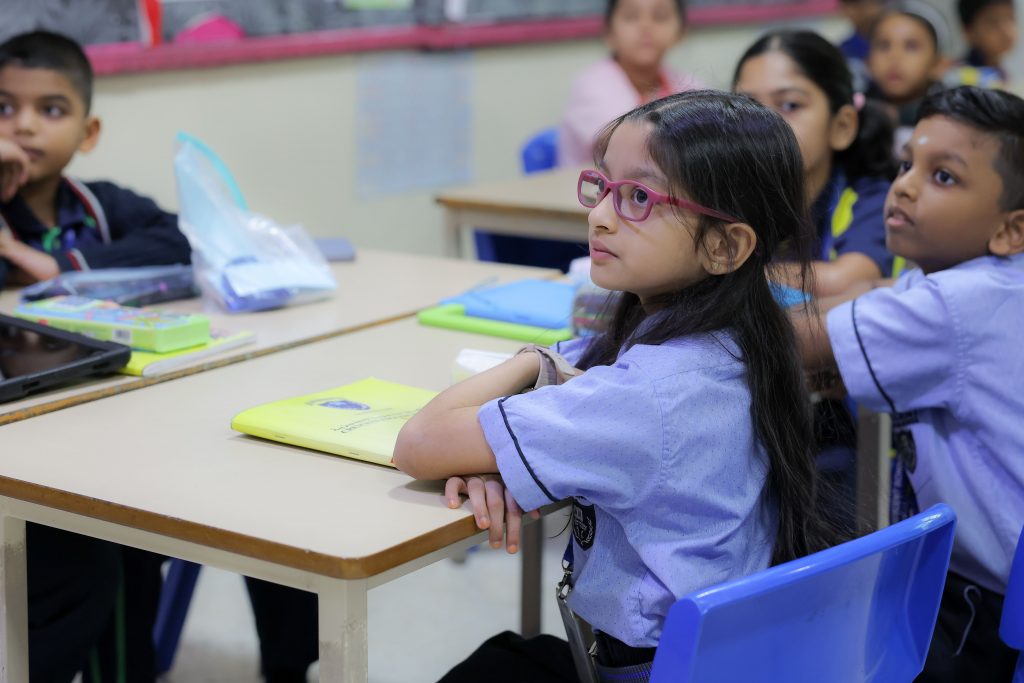
The Primary phase develops confident communicators, thoughtful problem solvers and curious learners. Children strengthen literacy, numeracy and scientific understanding through practical enquiry, discussion and connections with everyday life. Reading, writing and mathematics build on the foundations established in Kindergarten.
Within the national curriculum structure, Grades 1 and 2 continue the Foundational Stage; Grades 3–5 form the Preparatory Stage. This supports a gradual progression from integrated, activity-based learning towards more structured study.
Children investigate the natural and social world through observation, classification, questioning and simple investigations. UAE Social Studies and Moral Education connect learning to local culture, community and responsible citizenship. Arts, physical education, visits, performances and school events develop expression, teamwork, resilience and initiative.
SUBJECTS AT THE PRIMARY LEVEL:
| SCHOLASTIC | CO – SCHOLASTIC |
| English | Art & Craft |
| Second Language: Hindi, Malayalam, Tamil | Music |
| Arabic | Physical Education & Sports |
| Mathematics | Dance |
| Science | Literary and innovation activities |
| Moral, Social and Cultural Studies | Environmental activities and EEG |
| Artificial Intelligence | Mathematics and arts clubs |
| Islamic Education / Value Education | Arabic and Islamic clubs |
| Social Science | Cultural events and educational visits |
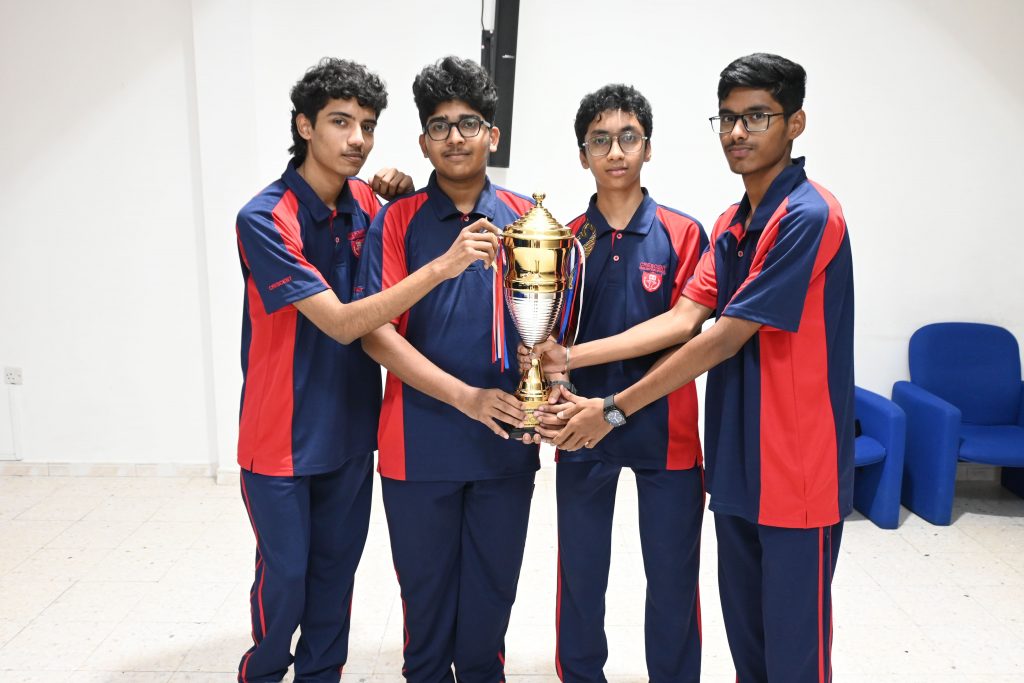
The Middle School at Crescent English High School is a dynamic phase of learning that nurtures curiosity, confidence, independence and critical thinking. Our CBSE curriculum for Grades 6–8 combines strong academic foundations with experiential, inquiry-based and real-life learning, enabling students to apply knowledge, develop problem-solving skills and become effective communicators and collaborators. Through continuous assessment, meaningful feedback and differentiated learning, students understand their strengths, identify areas for improvement and take greater ownership of their progress. Alongside academics, we foster wellbeing, inclusion, creativity, digital literacy, leadership, ethical values and responsible citizenship, providing students with opportunities to explore their interests and develop skills for a rapidly changing world. Our aim is to empower every learner to think independently, learn confidently, act responsibly and grow into a compassionate, future-ready individual.
SUBJECTS AT THE MIDDLE SCHOOL LEVEL:
| SCHOLASTIC | CO – SCHOLASTIC |
|
English |
Art Education |
|
Second Language: Hindi/Tamil/Malayalam |
Health & Physical Education |
|
Arabic |
ICT |
|
Mathematics |
Skill Education |
|
Science |
|
|
Social Studies |
|
|
MSCS |
|
|
Artificial Intelligence |
|
|
Islamic Education/ Value Education |
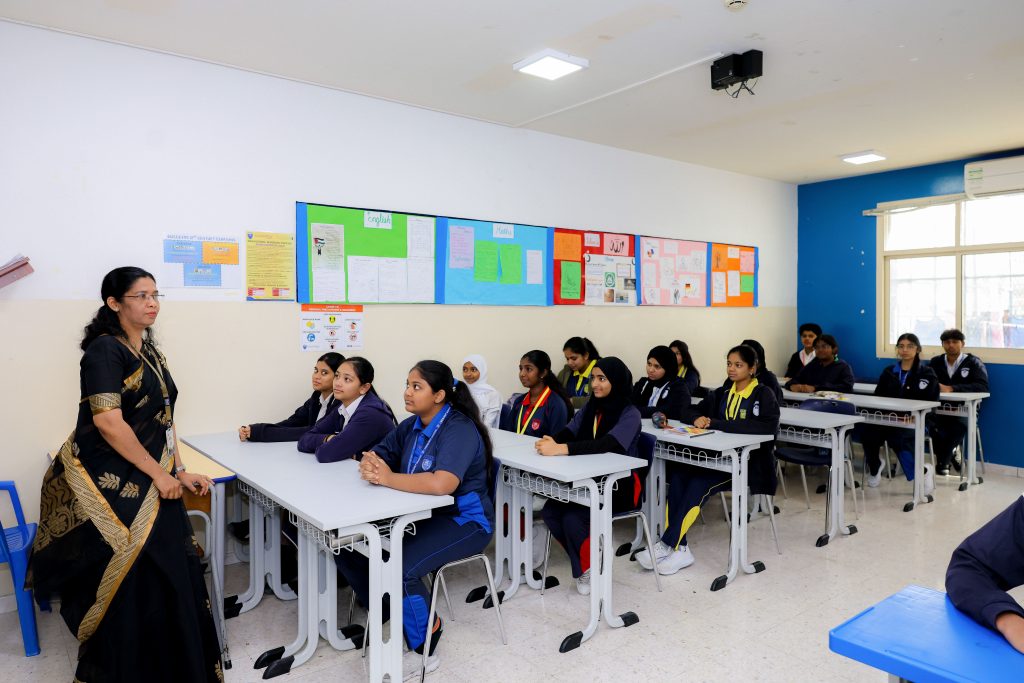
Students in Grades 9 and 10 are nurtured to become empathetic, respectful, and responsible individuals who value dignity, appreciate gender equality, and contribute positively to the community. They strengthen livelihood skills and develop international awareness essential for an interdependent world.
Learning at this stage is active and inquiry‑driven, enabling students to construct knowledge using diverse resources. A comprehensive assessment system evaluates academic achievement along with life skills, social competencies, and participation in co‑scholastic activities—supporting the identification and development of each learner’s unique potential.
SUBJECTS AT THE SECONDARY SCHOOL LEVEL:
| SCHOLASTIC | CO – SCHOLASTIC |
|
English |
Computational Thinking and AI |
|
Second Language -Hindi / Tamil / Malayalam |
Art Education |
|
Arabic |
Vocational Education |
|
Mathematics |
Physical Education and Well Being |
|
Science |
|
|
Social Studies |
|
|
Islamic Education / Value Education |
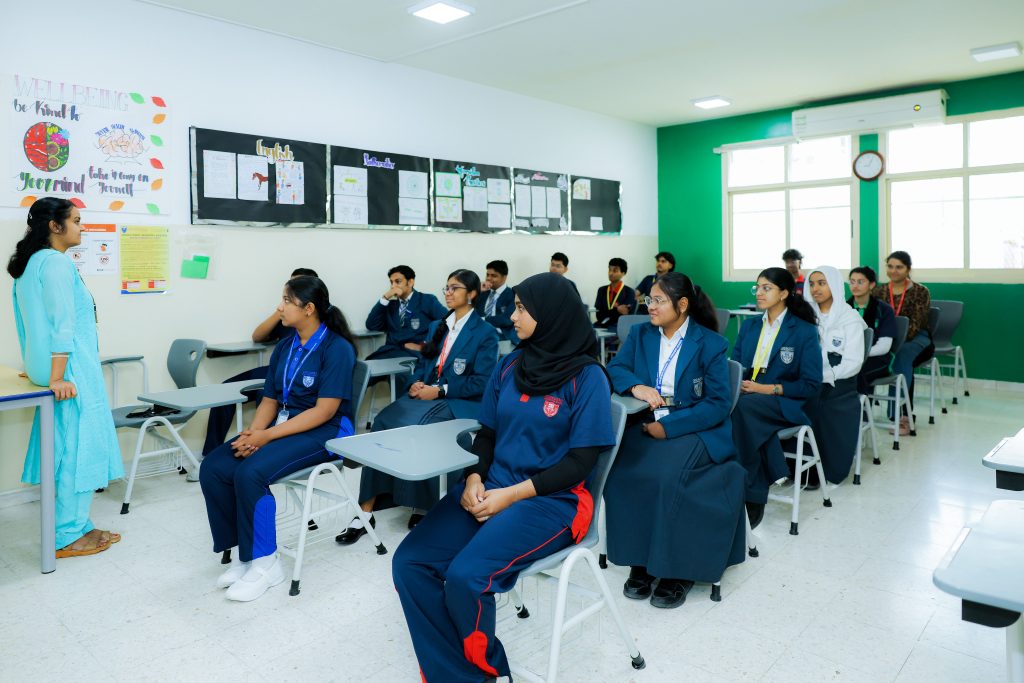
The Senior Secondary Stage marks the culmination of formal schooling, preparing students to transition confidently into higher education and specialized career pathways aligned with their aptitude and aspirations. CEHS adopts a global educational outlook, empowering learners with adaptability, confidence, and a strong value system.
Students engage in a wide range of co‑curricular and extracurricular programmes that complement academic choices and refine creative skills, critical thinking, and personal competencies. A diverse subject selection enables learners to explore their interests deeply and develop the competencies required for university readiness and future careers.
SUBJECTS AT THE HIGHER SECONDARY SCHOOL LEVEL:
| COMMERCE STREAM | SCIENCE STREAM |
|
English |
English |
|
Economics |
Biology |
|
Business Studies |
Physics |
|
Accountancy |
Chemistry |
|
Mathematics |
Mathematics |
|
Computer Science |
Computer Science |
|
Islamic Education |
Islamic Education |
|
Informatics Practices |
Informatics Practices |
|
Physical Education |
Physical Education |
To extend the class room to the community and promote meaningful interaction between students and their learning environment, numerous enrichment programmes are organized in the school. They go a long way in building confidence and self-discipline, besides imparting skills to handle competitive situations. Students evolve as individuals and learn to work as a team. Above all, the activities encourage students to be responsible and productive citizens.
Leadership and personality development programmes, counseling programmes, staff mentoring and development programmes, quiz competitions, debates, picnics and recreational activities are other highlights of the enrichment program at CEHS.
All students are motivated to involve themselves in co-curricular activities of their choice. They compete in an atmosphere where a sense of fair play is instilled.
The after-school enrichment program at CEHS provides a learning environment beyond school hours with opportunity to explore. This stimulates them to the healthier and happier, engaging them in fun activities that create a desire to learn and build on what they learn during school hours.
The program includes Karate, Music, Aerobics and Dance, Basketball, Football and Volleyball, Cricket and Hifz al Quran.
We at CEHS are fortunate to have an excellent learning support department. Screening of students is done on entry as well at other times when necessary. Students who are identified with special needs are given support either individually or in small groups in line with their needs. Curriculum is adapted for those students who are unable to access the normal curriculum.
Individual Educational Plans and Behavioral Modification Plans (IEP&BMP) are prepared for relevant students by the Inclusion department involving the students, teachers and parents to ensure effective support.
Students who have been identified with chronic illness are provided with Medical Care Plans.
Gifted and Talented
Enhancement and extension activities are incorporated across classes and subjects for students who perform above curriculum standards. In extra-curricular activities students are provided opportunities to compete nationally and internationally.
The school’s Career Counseling Cell under the Care and Support Section has the following aims on Career Education and Guidance: